
My services

Physical Wellbeing for your business

Occupational health, DSE and ergonomics: a holistic workplace assessment.

I am able to offer a broad assessment of the physical wellbeing of staff in the workplace, but within the context of your staff members’ lifestyle and health status (should they wish to share). This holistic approach to occupational and physical health in the workplace, is founded in osteopathic, ergonomic and physiotherapeutic training and 25 years in uncovering health challenges in context of the total experience of an individual.
 
Movement towards the permanent use of laptops, especially in the last 5 years, comes with a frequently occuring pain scenario, combining head and neck ache, wrist and shoulder, alongside low back – and can be avoided by adhering to guidance on the use of proper furniture, peripherals and adequate rest breaks.
Individual and small team report and treatment services
Ergonomics and holistic occupational health analysis.

Individual and small team report and treatment services

If you have identified a physical health problem within your workplace, but can’t get to the bottom of its origins, I can help. In small groups, or in individual consultations we can discuss the origins of the problem and work towards solutions, whilst liaising with management on the reality of putting these into place, and with a budget.
 
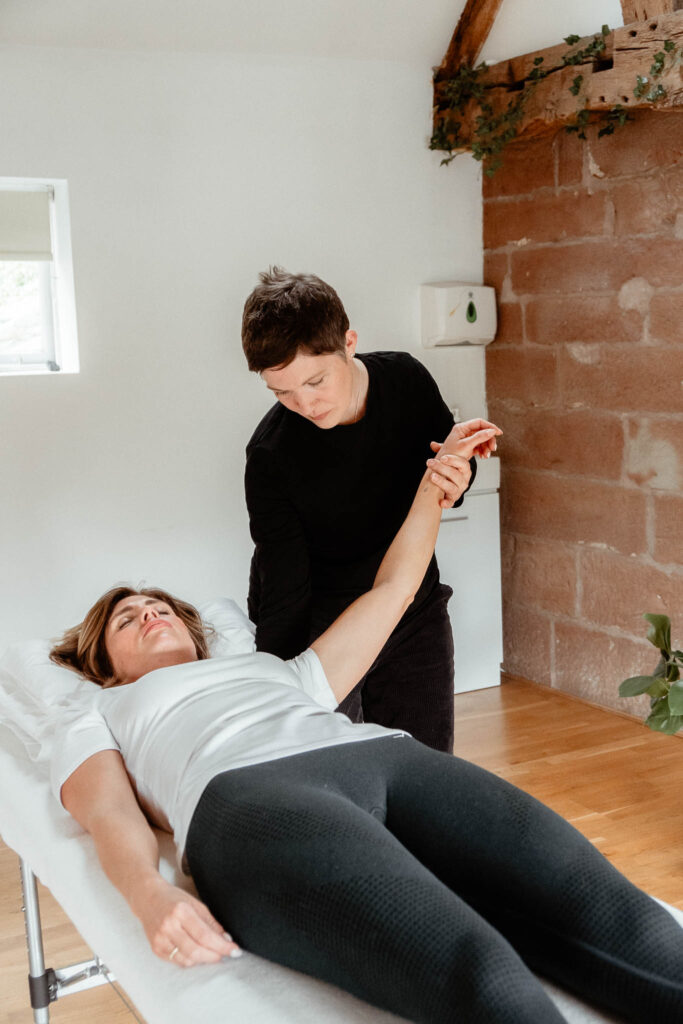
I can offer osteopathic treatment services to individuals who need a more detailed, personal approach to their difficulty or disability. This can be onsite or from my clinic in Stourbridge or Leamington Spa.
 

Example
B. has been off regularly with neck pain and headaches. She is fit and active generally, she says she is peri-menopausal. At work B.her coleagues report that B. often seems to be stressed, though this appears disproportionate to her task and staff are talking about her ‘bad attitude’ in the office, while she works from home (“lucky thing”).
After talking things through with B, it seems that she has been in some considerable discomfort since she began working from home in 2020. B. was glad to have a job and so adapted in so far as possible, but she misses the office. 
 
She doesn’t have much space at home as her 21 year old daughter now lives in what was her dining room, after the break up of her relationship. And so, B. tends to work from the worktop in the kitchen on her laptop. Whilst work have provided her with a good chair, she is not able to make it work in her particular circumstances and so sits on a stool all day – with her work issued spare screen, keyboard and mouse. The fluoresent strip lighting in her kitchen flickers and her daughter comes and goes through the day as her university hours are different to B.’s.

Result

B.’s employer has provided all the necessary equipment to protect B. in her work. But as a work place assessment has not been undertaken since before 2020, the employer doesn’t realise (and B. has not made them aware of her personal circumstances, as she feels it may make her a target for redundancy) – that the ‘workstation’ is non existent and that B. is suffering from isolation and loneliness at home. In addition the physical effects of working in such uncomfortable setting are becoming unbearable. And so she is often under slept, grumpy and impatient – her hormonal picture is also under sever pressure.
 
Rosie speaks with her employer about a possible transition back into the office for B, with her enthusiatic support. The employer is able to provide a space for 50% of B’s hours and has agreed to increase gradually, monitoring the outcome as they go. The lighting, space, friendship and shared work ethic in the workplace suits B much better and her symptoms start to ease with the help of some treatment. With the employee cash plan, B is able to have her eyes tested and finds that they have deteriorated considerably in the last few years, so picks up new glasses, specifically for PC use. A workplace assessment ensures that her work station is set up for her to sit comfortably doing her job in those hours at the office. Along with her renewed energy and the easing of her symptoms, B. reorganises the house so that she can sit at a desk for the other half of her hours. This will be monitored through the workplace assessment tool. B’s daughter is currently looking for other accommodation since her mother has found the motivation to place boundaries around her own health and asked her daughter to occupy a smaller room upstairs.
Ergonomics and holistic occupational health analysis.

Compliance and goodwill

Your business could benefit from a well-supported staff body that is more productive with less absence and presenteeism (which is worse!).
 
Ideally staff take responsibility for their own health in the work environment and they need to be supported with convenient, non-judgemental reporting and a genuine interest in presenting problems.

Day seminars and small group coaching

Training can help your colleagues understand why they are asked to stick to health and safety advice,  and give an opportunity for discussion of burning issues, that I can feed back to the business for improvements – perhaps things you may never hear of otherwise. Day rate starts at £900 for up to 20 staff.

Example
A non-governmental watchdog has a health week in March each year. A number of subjects including pilates, male and female health are covered by other speakers. Rosie presents two workshops for two large groups of staff. One is based on education in holistic pain management, and the other work/life balance including a yoga workshop delivered by one of Rosie’s colleagues. The cost for the 6 hours in attendance is £1290, to approximately 40 staff occupying one conference room, and broadcasting to 15 others working from home.